Research interests
My research focuses on machine learning for decision-making from noisy data. I am interested in reinforcement learning, world models and predictive modeling. In particular, I study methods that generalize and stay reliable when the data distribution shifts. I have applied these ideas to robot control, satellite operations and trading.
Publications
-
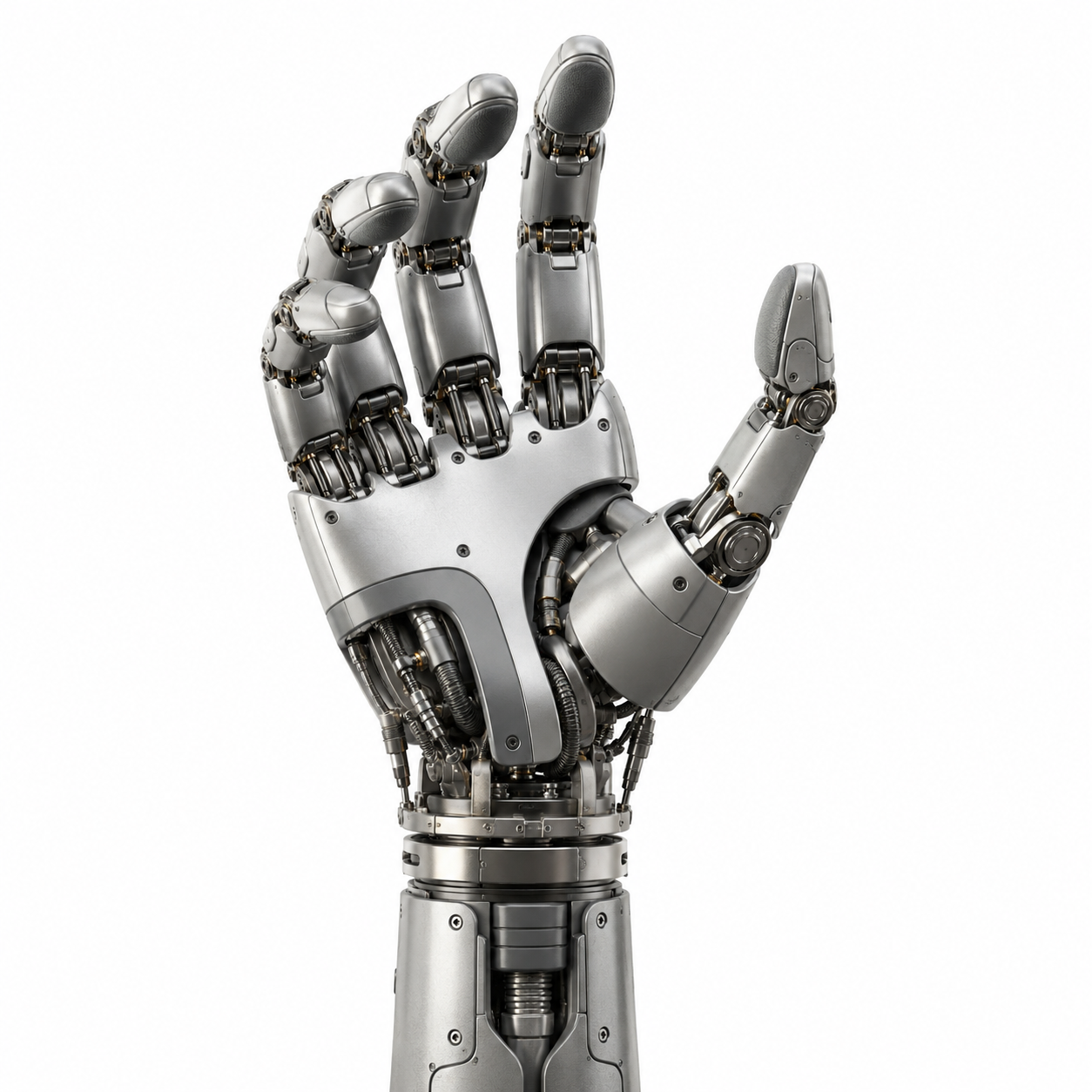
Demystifying When and Why VLAs Fail in Contact-Rich Tasks and How to Fix Them
Conference on Robot Learning (CoRL), 2026
@article{paresmorlans2026fact,
  title   = {Demystifying When and Why {VLAs} Fail in Contact-Rich Tasks and How to Fix Them},
  author  = {Par{\'e}s-Morlans, Carlota and Kuhn, Nils and Liu, Isabel and Longhini, Alberta and Bohg, Jeannette},
  journal = {arXiv preprint arXiv:2608.01402},
  year    = {2026},
  url     = {https://arxiv.org/abs/2608.01402}
}
We trace VLA failures in contact-rich manipulation to two root causes, precision failures from flow-matching training and force failures from the structure of force signals, and fix each with a targeted mechanism in FACT, which reaches a 66% average success rate across five real-world tasks versus 41% for the best prior baseline.
-
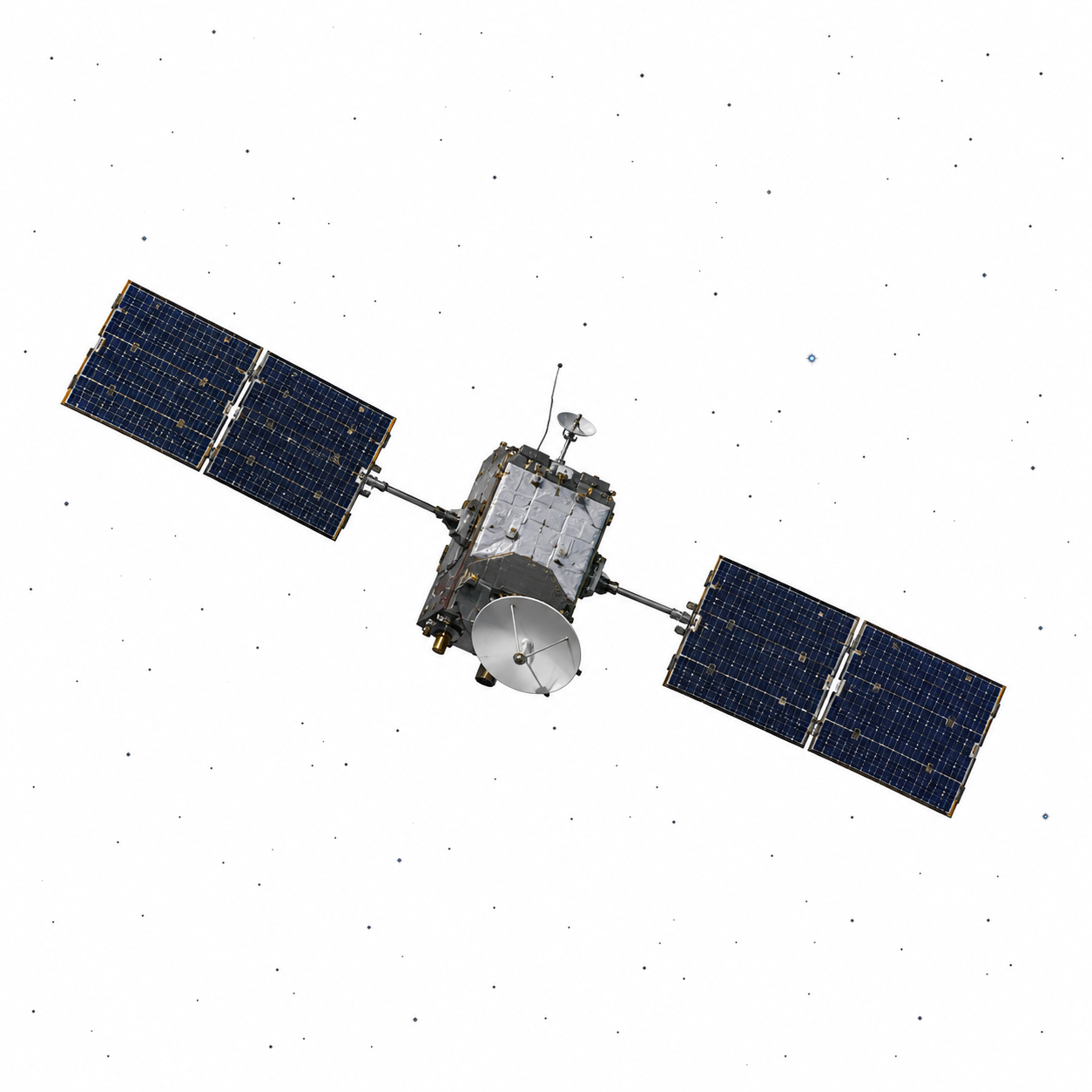
Validation-Gated Continual Learning for Anomaly Detection in Satellite Telemetry
Acta Astronautica, 2026
@article{KUHN2026971,
  title   = {Validation-Gated Continual Learning for Anomaly Detection in Satellite Telemetry},
  author  = {Kuhn, Nils and S{\'a}nchez G{\'o}mez, Bruno and Moreno Blasco, Natalia and Caserman, Polona and Antonello, Federico},
  journal = {Acta Astronautica},
  volume  = {249},
  pages   = {971--985},
  year    = {2026},
  issn    = {0094-5765},
  doi     = {10.1016/j.actaastro.2026.07.065},
  url     = {https://www.sciencedirect.com/science/article/pii/S0094576526005187}
}
We adapt satellite anomaly detectors over time with continual and active learning, deploying each update only after it passes validation, and reach a 92.9% F0.5 score on ESA's telemetry benchmark using under 5% of the original training data.
Projects
-
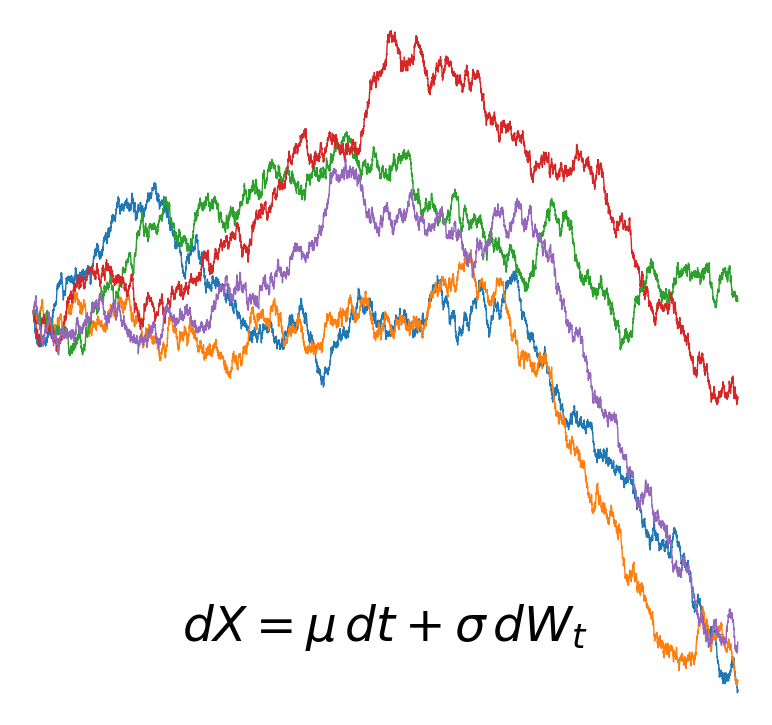
Continuous-Time Diffusion Policies for Visuomotor Control:
A Stochastic Calculus PerspectiveWe reframed diffusion policies as controlled SDEs (Variance Preserving / Variance Exploding / Critically Damped Langevin Dynamics) for visuomotor control. Then, we implemented multiple samplers and compared robustness on the PushT benchmark. Our experiments found that VP-SDE performs best and most consistently (≈0.78-0.80 success).
-
A Comparative Study of Trading Using Deep Q-Learning and Double Deep Q-Learning in Niche Markets
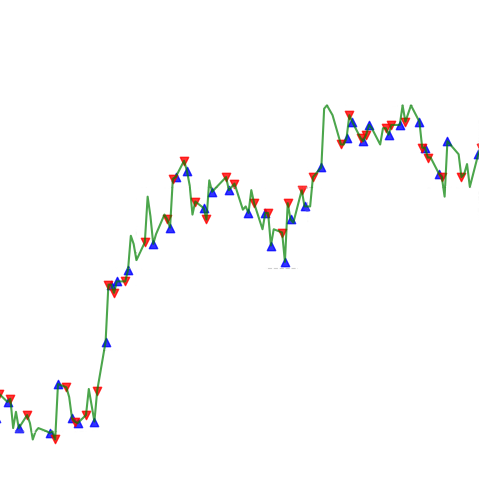
We investigated whether reinforcement-learning trading agents can perform well in niche markets by modeling trading as an MDP and comparing DQN vs Double DQN across three different action-space designs. Using data of the First North Growth Market and Novotek (with OMX30 as context), we evaluated performance with ROI and Sortino ratio across multiple runs for two assets. We showed how action-space choice influences stability and trading behavior, and that Double DQN generally delivers more robust risk-adjusted performance than standard DQN.
-

Severance: When Unlearning Crime Unlearns Survival
We reproduced and extended Lee et al.'s UNDO framework for robustifying LLM unlearning against relearning attacks by testing it on Pythia 160M with the TOFU benchmark. We test unlearning within a multi agent simulation with Mistral 7B. In our multi agent crime simulation, our adapted method drove criminal behavior to 0% across all 80 rounds. However, agents then failed to survive, choosing the correct life saving action only 20% of the time versus 54% for the baseline model. These results suggest that current unlearning techniques are suppressing target behavior while eroding adjacent reasoning that the model needs to function.
-
MARIO: Reinforcement Learning on Image Observations
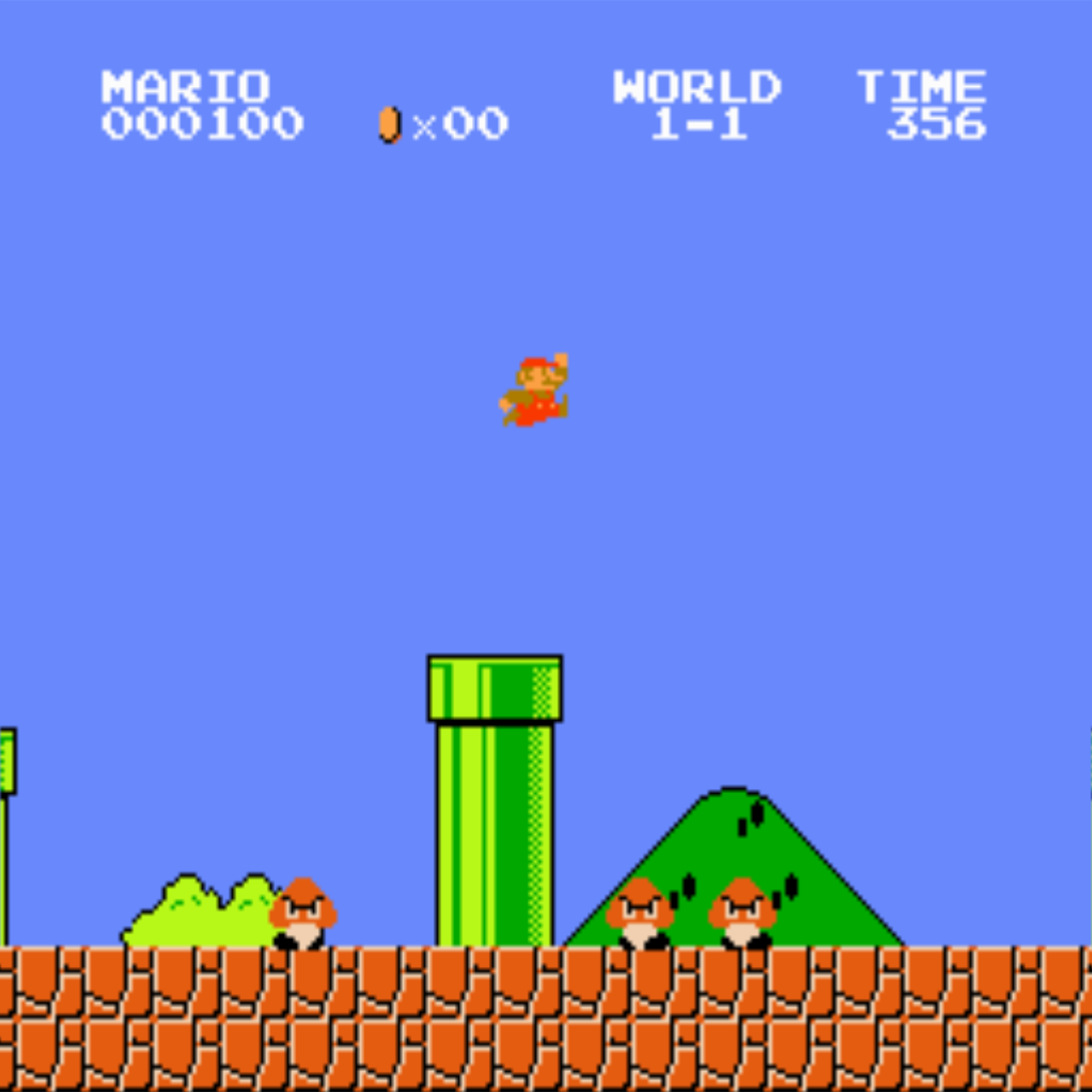
We trained PPO and DQN agents to play Super Mario Bros directly from raw pixels (stacked grayscale frames with the full 12-action control space). Our best agent achieved a completion rate of 96.32% on Level 1-1 using PPO and a top-k pseudo-greedy inference strategy. This performance is compared against other PPO and DQN agents. We investigated how architecture and preprocessing influences performance and evaluated transfer performance from Level 1-1 to Level 1-2.
-
GeoVision: Fine-Grained Urban Geolocation in San Francisco via Distribution-Aware Visual Models
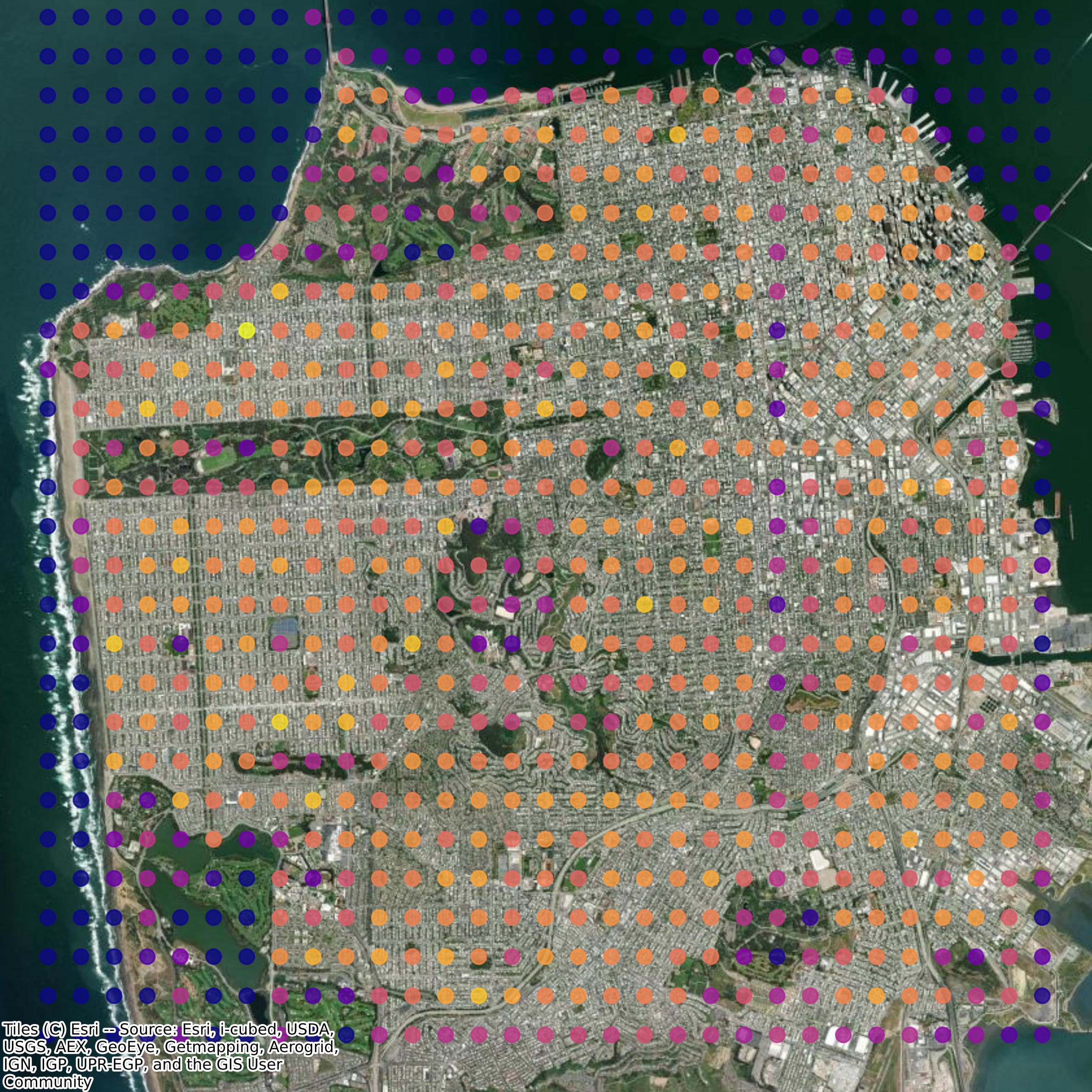
GeoVision predicts where a street photo was taken within San Francisco using a Vision Transformer (StreetCLIP) plus custom geolocation heads. A 31x31 grid classifier reaches 66.8% top-1 accuracy, while a probabilistic Gaussian head achieves ~600m mean localization error and provides uncertainty estimates. The project includes map-based visualizations and attention rollouts to show what cues the model uses when localizing images.
-

Predicting Hospital Readmission from Clinical Discharge Summaries
We built a machine-learning pipeline to predict hospital readmission risk using only free-text discharge summaries from the MIMIC-IV dataset. We compared multiple text representations like keyword features, ClinicalBERT embeddings, and LLM-generated summary embeddings across several classifiers (Logistic Regression, tree models, XGBoost, and a neural net). Our best model (a Random Forest on LLM-based embeddings) achieved roughly F1 ≈ 0.79 and Accuracy ≈ 0.74, showing that clinical notes contain a signal for readmission prediction.